

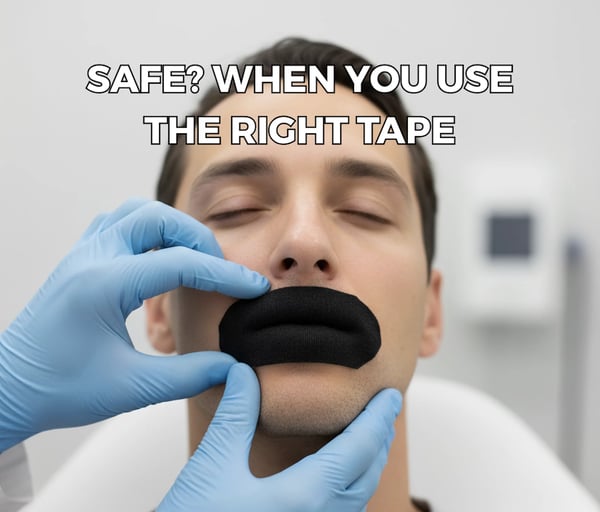
Is mouth taping safe? As this wellness trend explodes on TikTok, many are wondering if it’s a legitimate sleep hack or a dangerous fad. We break down the science, the risks, and the right way to do it, with expert input from Harvard-trained oral surgeon Dr. David Alfi, to help you understand if it’s right for you.
The Viral Sleep Hack Everyone’s Trying
You’ve probably seen it by now — people taping their mouths shut before bed and claiming they wake up more rested, less puffy, and even happier. It’s called mouth taping, and while it sounds extreme, it’s rooted in decades of research on the benefits of nasal breathing for sleep quality.
So, let’s ask the big question: is mouth taping actually safe?
Why People Tape Their Mouths
When you sleep with your mouth open, you lose humidity and oxygen efficiency — and your airway vibrates, leading to snoring. Over time, this can cause:
- Chronic dry mouth and bad breath
- Fatigue, even after a full night’s sleep
- Increased snoring and poor recovery
By gently taping your lips, you encourage nasal breathing — the body’s natural design for optimal airflow. Your nose filters, warms, and humidifies air while producing nitric oxide, a molecule that improves blood oxygen delivery, as explained in our article on the link between nasal breathing and nitric oxide.
But What About the Safety Concerns?
Safety depends entirely on how it’s done. Using duct tape or surgical tape is dangerous. Taping while congested or unable to breathe through your nose can also create risk. When done correctly, though, mouth taping is surprisingly safe and effective, a fact supported by experts at the Sleep Foundation.
“Mouth taping isn’t about sealing your lips shut — it’s about gently supporting them closed. When done right, it helps restore your body’s natural nasal breathing patterns.”
— Dr. David Alfi
What the Science Says
Researchers have linked mouth breathing to reduced sleep quality, oxygen imbalance, and fatigue. A 2023 study found that mouth taping reduced snoring intensity by nearly 47% in mild sleep-disordered breathing patients. You can learn more about the dangers of chronic mouth breathing in our detailed guide.
| Breathing Method | Oxygen Efficiency | Sleep Quality |
|---|---|---|
| Mouth Breathing | Low — CO₂ loss and throat vibration | Interrupted, shallow sleep |
| Nasal Breathing | High — Nitric oxide enhances oxygen uptake | Deep, restorative sleep |
Who Should Avoid Mouth Taping
Dr. Alfi notes that mouth taping isn’t for everyone. Avoid it if you have:
- Chronic nasal congestion or deviated septum
- Asthma, COPD, or breathing disorders
- Untreated sleep apnea
- Inability to remove the tape independently
For everyone else, it can be a safe, simple, and affordable way to improve sleep quality naturally. For more information, consult resources from the Mayo Clinic.
How to Do It Safely
- Test your nose first: Make sure you can breathe comfortably through both nostrils.
- Use skin-safe tape: Choose a breathable, hypoallergenic option like Hostage Tape.
- Start small: Apply a single vertical strip instead of covering your entire mouth.
- Go slow: Try it for 15–30 minutes before bed for a few nights.
Done correctly, mouth taping doesn’t feel restrictive — it feels calm, natural, and surprisingly effective.
The Bottom Line
Mouth taping isn’t a weird internet trend — it’s a behavioral tool that helps retrain your breathing patterns. It’s not for everyone, but for those who can breathe through their noses comfortably, it can make sleep deeper and quieter.
As Dr. Alfi says: “When done right, mouth taping is one of the simplest, safest ways to improve your sleep — no pills, no machines, just better breathing.”
Ready to Try It Safely?
If you’re curious to see how mouth taping can improve your sleep, start with a product built for safety. Hostage Tape is engineered for comfort, breathability, and gentle removal — even for beards. Take the first step towards better sleep tonight.
Disclaimer: This article is for educational purposes only and does not replace professional medical advice. If you have breathing or sleep disorders, consult a qualified healthcare provider before trying mouth taping.
Want the full deep-dive? Read the complete guide on Hostage Tape:
Leave a Reply